Table of contents
In today’s rapidly evolving business landscape, efficient management of human resources is no longer reserved for large enterprises. Small businesses now have access to advanced hris software, enabling them to streamline operations, enhance compliance, and boost employee satisfaction. Discover how the future of hris software is set to reshape small business strategies, making it easier than ever to compete and thrive in a digital-first world. Unlock insights into the trends that will define the next generation of workplace management—read on to see what lies ahead.
AI-driven automation streamlines HR workflows
Artificial intelligence and machine learning are rapidly reshaping the capabilities of modern HRIS software designed for small businesses. These technologies allow systems to automate formerly tedious tasks like employee onboarding, time tracking, and payroll processing. Through advanced tools such as algorithmic scheduling, HRIS platforms can automatically assign shifts based on employee availability, skills, and business requirements, reducing scheduling conflicts and optimizing workforce allocation. Automated data validation ensures accuracy in employee records and payroll, mitigating compliance risks and saving considerable time that would otherwise be spent correcting errors.
AI-powered systems can process and analyze data at a scale and speed human administrators simply cannot match. Natural language processing (NLP) capabilities now enable HRIS interfaces to interpret and respond to queries or retrieve employee information through conversational commands, lowering the technical barrier for everyday users. For instance, employees can check vacation balances or update personal information by simply asking the system, resulting in a smoother and more accessible HR experience. This intuitive interaction not only increases efficiency but also boosts employee satisfaction and engagement.
Predictive analytics, propelled by machine learning algorithms, is emerging as a game changer for workforce planning and resource management in small businesses. These insights help managers anticipate staffing needs by evaluating historical data, business trends, and seasonal fluctuations. By forecasting potential shortages or surpluses, managers can make informed hiring decisions, optimize labor costs, and avoid the disruption of last-minute schedule changes. Such proactive management enhances organizational agility and supports smarter decision-making, giving small businesses a competitive edge.
The cumulative impact of these AI-driven enhancements is a fundamental shift in how small businesses approach HR administration. By shifting the burden of repetitive, rule-based tasks to automated systems, owners and HR managers reclaim time to concentrate on high-value activities such as strategic planning or employee development. These innovations not only streamline daily operations but also help create a more engaging and responsive workplace culture. As these technologies become more accessible and affordable, small businesses are empowered to operate with the sophistication and efficiency once reserved for larger enterprises.
Cloud-based accessibility enhances flexibility and security
A pronounced migration is underway as small businesses increasingly opt for cloud-hosted HRIS platforms, transforming both the accessibility and efficiency of their HR functions. With cloud technology, HR managers and staff gain the ability to securely log in from any location with internet connectivity, a pivotal advantage for organizations embracing hybrid and remote work models. This flexibility not only supports productivity but also opens opportunities for talent acquisition beyond geographical boundaries, empowering teams to collaborate seamlessly regardless of their physical site.
Robust security features are integral to modern cloud HRIS solutions, with industry-standard encryption, multi-factor authentication, and systematic security audits forming the backbone of data protection strategies. By ensuring sensitive employee information is safeguarded against unauthorized access, small businesses can confidently navigate complex privacy regulations and maintain stakeholder trust. This digital approach further obviates the need for costly, on-premises IT infrastructure, allowing organizations to rapidly scale their operations as they grow without the burden of significant capital investment or ongoing maintenance.
Cloud platforms also streamline the integration of HRIS with other SaaS applications, simplifying ecosystem management and reducing manual data entry or process redundancies. This interconnectedness becomes especially valuable for resource-constrained small businesses, facilitating unified workflows across departments such as payroll, recruitment, and performance management. As a compelling illustration, My Intranet HRIS deftly centralizes leave management, expense oversight, and time tracking within a secure cloud environment, granting businesses a holistic view of employee operations while enhancing both compliance and convenience.
Employee self-service portals empower teams
Intuitive self-service functionality has become a defining feature in the evolution of modern HRIS software, transforming how employees interact with organizational processes. Teams are now able to update personal information, review benefit options, and submit leave requests without the need for direct HR intervention. This shift is driven by mobile-responsive dashboards that allow access from any device, biometric authentication for security and convenience, and customizable user interfaces that cater to individual preferences. Such technical advancements not only streamline administrative tasks but also create a more agile and adaptive HR environment.
Transparency and accessibility are significantly enhanced when employees are granted direct control over their HR data. The ability to view payroll history, track time-off balances, and enroll in benefit programs promotes a sense of ownership and trust within the workforce. These features substantially reduce the workload for HR professionals, freeing up resources for strategic initiatives instead of routine queries. Interactive knowledge bases and AI-powered chatbots further support this ecosystem by providing instant answers to frequently asked questions, troubleshooting issues, and guiding users through complex forms or policies in real time.
Empowered employees typically demonstrate greater satisfaction, engagement, and productivity, as self-service portals remove unnecessary bottlenecks and foster autonomy. The confidence gained from easily accessing accurate information and self-managing workplace needs translates into higher morale and reduced frustration. Artificial intelligence-driven support ensures that help is always available, even outside traditional office hours, contributing to a more supportive and responsive organizational culture. Over time, these improvements can lead to lower turnover rates, stronger team cohesion, and a more resilient business ready to adapt to future workforce expectations.
Advanced analytics drive smarter decision-making
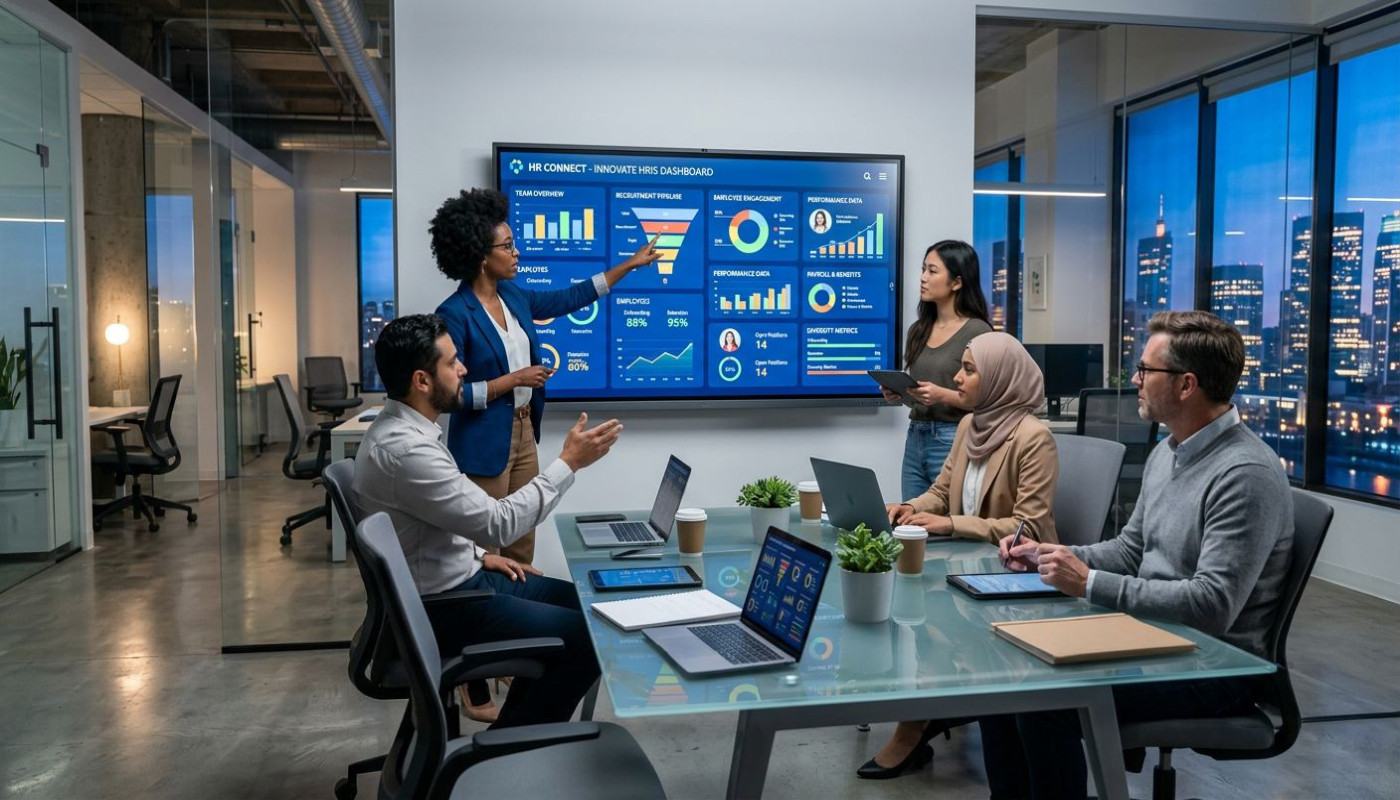
Modern hris software is transforming how small businesses approach talent management by harnessing advanced data visualization tools and customizable reporting features. These platforms now provide intuitive dashboards that surface workforce analytics in real-time, synchronizing data across multiple channels to offer a comprehensive organizational view. Decision-makers can drill into key performance indicators (KPIs) such as absenteeism rates, recruitment funnel efficiency, and employee satisfaction scores, allowing for deeper insight into company trends without relying on guesswork or manual spreadsheets.
Turnover tracking and performance metrics dashboards empower managers to pinpoint where talent gaps or process bottlenecks exist. With real-time data synchronization, businesses can instantly monitor shifts in workforce composition, identify high-performing teams, and flag areas with elevated attrition risks. Trend analysis tools not only aggregate historical data but also forecast future patterns, helping organizations anticipate hiring needs and allocate resources more strategically. For example, a spike in voluntary departures within a specific department might trigger a closer review of management practices or workplace culture initiatives.
This analytical approach supports proactive talent management, enabling businesses to move beyond reactive problem-solving toward continuous organizational improvement. By transforming raw HR data into actionable insights, small businesses can recognize early warning signs before they escalate into larger issues, ultimately supporting agility in a fast-changing market. Data-driven strategies give companies a competitive edge, allowing leaders to measure the effectiveness of new policies, refine onboarding processes, and ensure that every HR decision aligns closely with overall business goals.
Seamless integration with third-party tools optimizes workflows
Interoperability has become a defining feature in modern HRIS software, especially for small businesses aiming to streamline processes and reduce manual work. Integrating HRIS platforms with accounting, payroll, and project management tools ensures real-time data flows smoothly between systems, avoiding duplicated entries and errors. Technical advancements such as open APIs allow developers to customize connections tailored to unique business needs, while single sign-on (SSO) enhances security and user convenience by enabling employees to use one set of credentials across multiple systems. Middleware solutions act as bridges, translating and routing data between disparate platforms, ensuring the right information is available where it’s needed most.
Eliminating data silos through integrated ecosystems not only simplifies compliance and auditing but also improves cross-functional collaboration. Centralized dashboards offer a unified perspective, allowing managers to monitor workforce metrics, project statuses, and financial information in one place. This comprehensive visibility supports informed decision-making, as trends and potential issues become easier to spot and address proactively. By embracing seamless integration, small businesses are better positioned to adapt quickly to changing demands, extract maximum value from HR technology, and build agile operations that stand the test of time.
On the same subject

How Modern Sales Software Transforms Team Performance And Decision-making

How Adopting Hris Software Can Revolutionize Small Business Management

Exploring The Impact Of Hris Software On Remote Workforce Management

How Integrating Hris Software Enhances Small Business Efficiency

Maximizing Productivity: Strategies For Using Shared Workspaces

Large Corporations And Their Shift Towards Coworking Models

How Integrating Leave Management Software Improves Employee Satisfaction

Exploring The Benefits Of Hiring Consultants For Efficient Business Setups

Exploring The Impact Of Advanced Product Adoption Platforms On Workplace Efficiency

Maximizing Productivity: Essential Tools And Techniques For Efficient Web Development

Incorporating AI Into Workplace Training: Visual Aids And Simulations
